
Palladium on carbon CAS 7440-05-3
Discover Aure Chemical's Premium Palladium on Carbon Supply
Palladium on carbon (Pd/C), CAS No. 7440-05-3, is the most widely used heterogeneous palladium catalyst in pharmaceutical, fine chemical, agrochemical, and specialty material industries. Supplied by Aure Chemical as a black to dark gray powder with palladium loadings typically ranging from 1% to 10% on high-surface-area activated carbon, this versatile catalyst delivers exceptional activity, selectivity, and poison resistance under mild conditions. Its ability to efficiently reduce alkenes, alkynes, nitro groups, carbonyls, aromatic rings, and to perform debenzylation of protecting groups makes it indispensable for API synthesis, natural product derivatization, and bulk intermediate production. Aure Chemical offers tightly controlled metal dispersion, multiple carbon support grades (wood, coconut, peat), and stringent quality assurance to ensure batch-to-batch reproducibility, maximum turnover, and easy recovery for cost-effective, scalable industrial processes worldwide.
Basic Information of Palladium on Carbon
Aure Chemical supplies Palladium on Carbon as a premium heterogeneous Pd catalyst with optimized metal dispersion and support properties for reliable hydrogenation and hydrogenolysis applications.
| CAS No. | 7440-05-3 (Pd); support material varies |
|---|---|
| EC No. | 231-115-6 (Pd) |
| Chemical Formula | Pd on activated carbon |
| Molecular Weight | 106.42 g/mol (Pd basis) |
| Appearance | Black to dark gray powder |
| Odor | Odorless |
| Melting point | Not applicable (support decomposes; Pd melts at 1555 °C) |
| Boiling point | Not applicable |
| Density | approx. 0.4–0.8 g/cm³ (bulk density, loading-dependent) |
| Solubility | Insoluble in water and organic solvents |
| Nature (hazards) | Combustible solid (carbon support), may cause respiratory irritation when dust is inhaled, harmful if dust is inhaled in large quantities |
| RIDADR | Not regulated (non-hazardous for transport in many classifications; consult SDS for specific handling) |
| Chemical Structure | 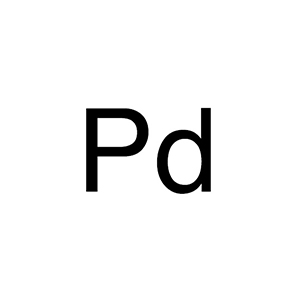 |
Aure Chemical provides customizable Pd loadings (1%, 5%, 10% most common), support types (wood, coconut, peat-based carbon), pre-treatments (reduced, oxidized, sulfided), and moisture levels to match your specific hydrogenation or process requirements.
Primary Applications of Palladium on Carbon
Palladium on Carbon (Pd/C) is the benchmark heterogeneous catalyst for selective hydrogenation and hydrogenolysis in high-value chemical manufacturing. Dispersed palladium nanoparticles on high-surface-area activated carbon enable efficient hydrogen activation and substrate adsorption, forming highly active surface Pd–H species. It is widely employed in systems described in hydrogenation and supported palladium catalysis, where catalyst stability, recyclability, and operational simplicity are essential.
Hydrogenation of Alkenes & Alkynes
Provides rapid and selective reduction of C=C and C≡C bonds in complex molecules, ideal for pharmaceutical intermediates and natural product derivatives with minimal over-reduction. Surface-mediated hydrogen transfer enables precise control of reaction selectivity.Aromatic Ring Hydrogenation
Efficiently saturates benzene rings and heterocycles under moderate pressure and temperature, producing cyclohexane-based building blocks for agrochemicals, polymers, and performance chemicals. Optimized Pd dispersion improves turnover frequency and substrate accessibility.Nitro Group Reduction to Amines
Delivers high-yield, clean conversion of aromatic and aliphatic nitro compounds to primary amines, a critical step in dyes, pesticides, and active pharmaceutical ingredient manufacturing. The heterogeneous nature allows simple filtration and catalyst recovery after reaction completion.Debenzylation & Protecting Group Removal
Enables selective hydrogenolysis of O-benzyl, N-Cbz, and related protecting groups with excellent functional group tolerance, essential for multi-step synthesis in medicinal chemistry. Controlled surface reactivity minimizes undesired side reactions.Carbonyl & Imine Reduction
Catalyzes selective hydrogenation of ketones, aldehydes, and imines to alcohols or amines, offering superior selectivity in the presence of other reducible groups. Reaction conditions can be tuned to balance rate and chemoselectivity.Fine Chemical & API Manufacturing
Widely applied in GMP processes for reduction and deprotection steps of active pharmaceutical ingredients, providing scalability, easy catalyst removal, and high reproducibility. Supported palladium systems facilitate consistent batch performance and streamlined downstream purification.
For a comprehensive overview of palladium material categories—including salts, oxides, supported catalysts, and organometallic systems across industrial sectors—refer to Palladium Compounds: Applications, Categories & Industrial Uses.
Why Choose Aure Chemical for Your Palladium on Carbon Supply?
Partner with Aure Chemical for Palladium on Carbon to access industry-proven catalytic performance, customization flexibility, and secure precious metal supply for your hydrogenation processes.
Optimized Pd Dispersion & Activity
Advanced impregnation technology ensures uniform Pd particle size and high active surface area for maximum turnover frequency and product selectivity.Custom Catalyst Formulations
Tailored Pd loadings, support types, reduction states, and additives to precisely match your substrate, solvent system, and reaction conditions.Consistent Batch-to-Batch Reproducibility
Rigorous in-house testing (ICP, BET, XRD, activity assays) guarantees low variation and predictable scale-up performance.Secure Palladium Supply Chain
Responsible sourcing, strategic inventory, and transparent pricing mitigate market volatility and ensure uninterrupted availability.Technical & Regulatory Support
Expert guidance on catalyst activation, poison mitigation, recycling, and full documentation (COA, REACH, SDS) for seamless integration into GMP and fine chemical operations.
Hazards Classification
GHS Classification: Specific Target Organ Toxicity, Single Exposure (respiratory tract irritation) (Category 3); Combustible dust hazard; Aquatic Chronic (Category 3)
Hazard Statements: H335: May cause respiratory irritation; H413: May cause long lasting harmful effects to aquatic life
UN Number: Not regulated
Hazard Class: Not classified as hazardous for transport
Packing Group: Not applicable


Packaging, Logistics & Compliance Capabilities
Aure Chemical provides flexible packaging solutions, compliant logistics arrangements, and controlled storage practices to support laboratory-scale, pilot-scale, and commercial-scale global supply.
Packaging Options
- 25 kg / 50 kg bags (fiber drum, aluminum bag, HDPE drum)
- 100 kg / 200 kg steel or HDPE drums
- 500 kg / 1000 kg IBC containers
- Bulk liquids in ISO tank containers
- Customized packaging upon request
Transportation Modes
- Sea freight (FCL / LCL)
- Air freight for selected products
- Road and rail transportation
- Dangerous & non-dangerous cargo handling
- Incoterms: EXW, FOB, CFR, CIF, DAP, DDP
Storage & Handling
- Dry, cool, and well-ventilated warehouses
- Segregation by hazard class
- FIFO inventory management
- Temperature-controlled storage if required
- Regular inspection & labeling control
Documentation & Compliance
- Safety Data Sheet (SDS)
- Certificate of Analysis (COA)
- Dangerous Goods Declaration (DGD)
- Packing List & Commercial Invoice
- IMDG / IATA / ADR compliant labeling
For packaging customization or logistics consultation, please contact us.