
Phenylphosphonic dichloride CAS 824-72-6
High-Purity Phenylphosphonic Dichloride CAS 824-72-6 from Aure Chemical: Stable Supply & Compliance
Phenylphosphonic dichloride is a reactive organophosphorus compound that serves as an important reagent in synthetic chemistry. It is particularly valued for its ability to introduce phenylphosphonyl groups into target molecules, supporting applications in flame retardancy and advanced materials.
Basic Information
| CAS No. | 824-72-6 |
|---|---|
| EC No. | 212-534-3 |
| Linear Formula | C6H5POCl2 |
| Molecular Weight | 194.98 |
| Appearance | Colorless to pale yellow clear liquid |
| Melting Point | 3 °C (lit.) |
| Boiling point | 258 °C (lit.) |
| Density | 1.375 g/mL at 25 °C (lit.) |
| RIDADR | UN 3265 Class 8, PG II |
| Chemical Structure | 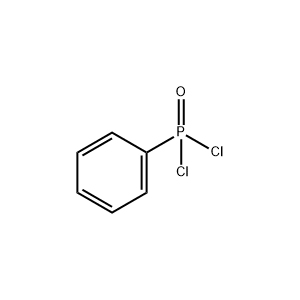 |
Key Applications
Flame Retardant Intermediate: Primary reagent for synthesizing phosphorus-containing flame retardants used in polymers, textiles, and epoxy resins.
Organophosphorus Synthesis: Versatile building block for preparing phosphonates, phosphinamides, and other phosphorus compounds through nucleophilic substitution.
Polymer Modification: Employed in the production of flame-retardant polymers and additives for enhanced thermal stability.
Pharmaceutical and Agrochemical Intermediate: Used in the synthesis of specialized organophosphorus derivatives for active ingredients and crop protection.
Specialty Chemical Production: Applied in research and industrial processes requiring phenylphosphonyl functionality for advanced materials.
Safety and Storage
Phenylphosphonic dichloride is corrosive and moisture-sensitive, reacting vigorously with water to release HCl. Handle with full protective equipment in a fume hood and avoid contact with water or bases. Store in tightly sealed containers under inert atmosphere in a cool, dry, well-ventilated area away from incompatible materials.
Aure Chemical: Your Reliable Partner
Reliable Purity Standards: Advanced QA ensures consistent high purity with full Certificate of Analysis provided for each batch.
Secure International Shipping: Robust logistics network delivers bulk quantities safely to global customers on schedule.
Regulatory Documentation Support: Complete SDS, UN 3265 transport papers, and compliance information supplied for seamless procurement.
Technical Expertise Available: Dedicated specialists offer guidance on safe handling, reaction optimization, and packaging customization.
Hazards Classification
GHS Classification: Skin Corrosion Category 1B (GHS05), Serious Eye Damage Category 1 (GHS05), Acute Toxicity Category 4 (Oral/Dermal).
Hazard Statements: H314 (Causes severe skin burns and eye damage), H302 + H312 (Harmful if swallowed or in contact with skin).
UN Number: UN 3265
Hazard Class: 8 (Corrosive)
Packing Group: II

Packaging, Logistics & Compliance Capabilities
Aure Chemical provides flexible packaging solutions, compliant logistics arrangements, and controlled storage practices to support laboratory-scale, pilot-scale, and commercial-scale global supply.
Packaging Options
- 25 kg / 50 kg bags (fiber drum, aluminum bag, HDPE drum)
- 100 kg / 200 kg steel or HDPE drums
- 500 kg / 1000 kg IBC containers
- Bulk liquids in ISO tank containers
- Customized packaging upon request
Transportation Modes
- Sea freight (FCL / LCL)
- Air freight for selected products
- Road and rail transportation
- Dangerous & non-dangerous cargo handling
- Incoterms: EXW, FOB, CFR, CIF, DAP, DDP
Storage & Handling
- Dry, cool, and well-ventilated warehouses
- Segregation by hazard class
- FIFO inventory management
- Temperature-controlled storage if required
- Regular inspection & labeling control
Documentation & Compliance
- Safety Data Sheet (SDS)
- Certificate of Analysis (COA)
- Dangerous Goods Declaration (DGD)
- Packing List & Commercial Invoice
- IMDG / IATA / ADR compliant labeling
For packaging customization or logistics consultation, please contact us.