o-Xylene Supply for Industrial Applications
Aure Chemical works with qualified Chinese producers and supply partners to evaluate o-Xylene requirements for international industrial buyers. o-Xylene, also known as ortho-Xylene or 1,2-dimethylbenzene, is a single xylene isomer primarily used as a feedstock for phthalic anhydride production and in selected industrial solvent systems.
Product suitability should be evaluated according to the required assay, residual isomer profile, ethylbenzene, water, color, nonvolatile residue and other application-specific parameters. The applicable source, specification, batch documentation, packaging and current availability should be confirmed for each inquiry.
Buyers comparing o-Xylene with other xylene isomers should identify the exact product and CAS number. o-Xylene CAS 95-47-6 is not interchangeable with m-Xylene, p-Xylene or mixed xylenes without process-specific technical review.
Basic Information of o-Xylene
o-Xylene is the ortho isomer of dimethylbenzene, with two methyl groups located at the 1,2-positions of the benzene ring. It is generally supplied as a clear, colorless liquid with a characteristic aromatic odor. The physical-property values below are reference information; the current specification, SDS and batch documentation for the applicable source should be reviewed before purchase or handling.
| Product Name: | o-Xylene |
|---|
| Chemical Name: | 1,2-Dimethylbenzene |
|---|
| Alternative Names: | Ortho-Xylene; o-Xylol |
|---|
| CAS No.: | 95-47-6 |
|---|
| EC No.: | 202-422-2 |
|---|
| Molecular Formula: | C8H10 |
|---|
| Molecular Weight: | Approximately 106.17 g/mol |
|---|
| Appearance: | Clear, colorless liquid |
|---|
| Melting Point: | Approximately -25°C |
|---|
| Boiling Point: | Approximately 144°C |
|---|
| Density: | Approximately 0.88 g/mL at 20°C |
|---|
| Transport Information: | Commonly transported under UN 1307, Class 3, Packing Group III. The applicable classification must be confirmed against the current SDS and shipment documentation. |
|---|
| Chemical Structure: | 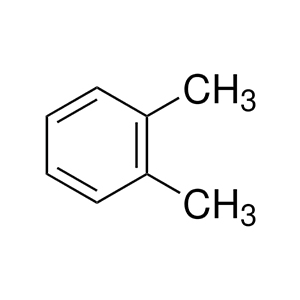 |
|---|
o-Xylene Specification and Quality Review
A professional o-Xylene inquiry should include more than a general purity request. The relevant specification depends on the intended process, approved feedstock profile and customer quality requirements.
Parameters that may be reviewed include:
o-Xylene assay: The required single-isomer content should be stated together with the analytical and reporting basis where necessary.
Residual xylene isomers: Limits for m-Xylene and p-Xylene may be important for single-isomer applications.
Ethylbenzene and other aromatic components: These may affect oxidation, purification, solvent performance or customer qualification.
Water and appearance: Moisture, color and visible contamination requirements should be agreed before order placement.
Process-sensitive impurities: Sulfur, nonvolatile residue or other trace components may require review depending on the application.
Analytical methods: Gas-chromatographic area percentage, mass percentage and other reporting bases should not be treated as automatically equivalent.
A representative COA may support preliminary evaluation, but it does not report results for the future shipment batch. The batch COA should be reviewed against the specification agreed in the quotation, contract or purchase order.
Principal Applications of o-Xylene
The two principal industrial uses of o-Xylene are phthalic anhydride production and selected solvent applications. Suitability for either use depends on the exact grade and buyer specification.
Phthalic Anhydride Feedstock: o-Xylene is oxidized to produce phthalic anhydride, an intermediate used in plasticizer, alkyd-resin, unsaturated-polyester-resin and other chemical value chains.
Industrial Solvent: o-Xylene may be used in selected coatings, paints, inks, adhesives and process systems where its solvency and evaporation characteristics meet the formulation requirements.
Organic Synthesis: It may also serve as an aromatic starting material or process solvent in application-specific chemical manufacturing.
o-Xylene for Phthalic Anhydride Production
Phthalic anhydride production is the principal industrial pathway for o-Xylene. Feedstock evaluation may include o-Xylene assay, residual isomers, ethylbenzene, water, color, nonvolatile residue and other process-sensitive components.
The effect of an impurity depends on the oxidation technology, catalyst system, purification design and buyer-specific operating requirements. A high headline purity does not by itself establish process suitability.
Buyers evaluating this application may review o-Xylene for phthalic anhydride production for additional information about the value chain, feedstock qualification and procurement considerations.
o-Xylene as an Industrial Solvent
In solvent applications, buyers may evaluate solvency, evaporation behavior, odor, appearance, color, residue, moisture and compatibility with the formulation. o-Xylene should not automatically be substituted for mixed xylenes, m-Xylene, p-Xylene or another aromatic solvent without formulation and process review.
Suitability also depends on occupational exposure controls, emissions requirements, customer specifications and destination regulations. Further context is available in o-Xylene industrial solvent applications.
Packaging and Bulk Supply Options
Packaging and transportation should be evaluated according to the required quantity, source capability, destination, transport route, applicable regulations and receiving-site infrastructure.
Possible arrangements may include:
Approved drums: May be considered for smaller, trial or qualification quantities where the source and carrier permit.
Approved IBCs: May be evaluated where package approval, material compatibility, regulations and consignee capability allow their use.
Road tanker: May be considered for domestic, regional or port-transfer movements subject to tank acceptance and local requirements.
ISO tank container: May be evaluated for international bulk-liquid transportation according to tank compatibility, cleanliness, previous cargo, carrier acceptance and receiving capability.
No universal package size or ISO tank loading quantity applies to every shipment. Tank design, permitted filling conditions, product density, route restrictions, gross-weight limits and operator approval must be reviewed for the individual project.
Buyers may provide their own ISO tank or request evaluation of a supplier-arranged tank. Tank ownership, leasing, cleaning, local movement, international freight, destination discharge, detention, demurrage and return responsibilities should be agreed separately from the Incoterm.
Additional guidance is available in bulk xylene packaging and ISO tank transportation.
Storage, Handling and Safety
o-Xylene is a volatile and flammable aromatic liquid. Storage and handling should follow the current SDS, applicable regulations, approved equipment design and site-specific EHS procedures.
Ignition Control: Keep the product away from heat, sparks, flames and other ignition sources according to the approved site controls.
Static Electricity: Bonding, grounding and suitable transfer equipment may be required during loading, unloading and internal transfer.
Ventilation and Vapor Management: Suitable ventilation and closed-transfer arrangements should be evaluated according to the facility and operation.
Compatible Equipment: Tanks, pumps, hoses, seals, gaskets and fittings should be reviewed for chemical and operational compatibility.
Personal Protection: PPE requirements should be determined from the current SDS, exposure assessment and site procedure.
Spill and Emergency Planning: Facilities should maintain approved response procedures and trained personnel appropriate to the quantity and operation.
Hazard statements, pictograms and transport details can vary according to the applicable regulatory framework and SDS version. The current SDS issued or provided for the proposed source should take precedence over generalized website summaries.
Documents Available for Technical Evaluation
Depending on the source and project, Aure Chemical may coordinate or provide available documents for preliminary evaluation, such as:
Standard product specification.
Representative or sample COA.
Batch COA for the identified shipment lot.
Current SDS.
TDS where available and applicable.
Packaging or tank information.
Cleaning and previous-cargo information for tank shipments where required and available.
Commercial invoice, packing list, transport documents and certificate of origin where applicable.
A specification defines the controlled quality limits, while a COA reports analytical results. An SDS communicates hazards and safe-handling information and should not be treated as a batch-quality certificate.
Information Required for an o-Xylene RFQ
To evaluate technical, commercial and logistics feasibility, buyers should provide:
Exact product name and CAS number 95-47-6.
Required assay and complete impurity specification.
Intended use.
Trial quantity, regular order quantity and estimated annual demand.
Preferred packaging or bulk-tank arrangement.
Buyer-provided or supplier-arranged ISO tank requirement.
Destination country, port or delivery point.
Required Incoterm and named place or port.
Receiving-site storage and unloading capability.
Required COA, SDS, TDS and shipping documents.
Sample, qualification or source-approval requirements.
Target shipment schedule.
Proposed payment method.
Importer and end-user information where required.
Buyers preparing a formal inquiry may use the xylene specifications and procurement checklist to align technical, quality, packaging, document and commercial requirements before requesting a quotation.
Evaluating o-Xylene Supply with Aure Chemical
Aure Chemical is a China-based chemical supplier, distributor and international sourcing partner. We work with qualified Chinese producers and supply-chain partners to evaluate o-Xylene requirements according to specification, quantity, intended use, packaging, destination and current source availability.
Aure Chemical may assist with product-identity confirmation, source evaluation, representative COA and specification review, SDS coordination, packaging or tank-option discussions, export-document coordination and dangerous-goods logistics evaluation.
FCA, CPT, CIP, FOB, CFR or CIF arrangements may be discussed where operationally appropriate to the transport mode, carrier handover point and named destination. Packaging, tank availability, carrier acceptance, freight space, destination unloading and final lead time remain subject to project-specific confirmation.
Final technical approval remains with the buyer. Available specifications, documents and packaging arrangements vary by source, and any source change should be reviewed against the buyer’s qualification requirements.
Frequently Asked Questions
Is o-Xylene the same as mixed xylenes?
No. o-Xylene is the single 1,2-dimethylbenzene isomer, CAS 95-47-6. Mixed xylenes contain varying proportions of o-Xylene, m-Xylene, p-Xylene and ethylbenzene. They should not be treated as interchangeable without process review.
What is the main industrial use of o-Xylene?
Its principal industrial use is as a feedstock for phthalic anhydride production. It may also be used as an aromatic solvent or chemical intermediate in selected applications.
Is purity the only important o-Xylene specification?
No. Residual xylene isomers, ethylbenzene, water, color, nonvolatile residue and other process-sensitive components may also affect qualification.
Can Aure Chemical provide a COA and SDS?
A representative COA, current SDS and other available documents may be coordinated for technical review. The batch COA for the actual shipment should be checked against the agreed specification.
Can o-Xylene be supplied in drums?
Drum packaging may be evaluated for smaller quantities where the source, package approval, carrier and destination requirements permit. Exact package availability should be confirmed before quotation.
Can o-Xylene be shipped in an ISO tank?
ISO tank transportation may be evaluated for bulk requirements. Tank material, cleanliness, previous cargo, fittings, route, carrier acceptance and receiving-site capability should be confirmed.
What information is required for a quotation?
Buyers should provide the required specification, intended use, quantity, annual demand, packaging or tank preference, destination, Incoterm, unloading capability, required documents and shipment schedule.
Industrial buyers evaluating o-Xylene supply may submit the required specification, quantity, intended use, packaging or tank arrangement, destination, Incoterm, qualification requirements and shipment schedule to Aure Chemical for a technical, commercial and logistics feasibility review.