

Xylene is an aromatic hydrocarbon consisting of a benzene ring with two methyl substituents. It exists as three positional isomers—o-Xylene, m-Xylene and p-Xylene—collectively known as the xylene isomers. Although all three share the molecular formula C₈H₁₀, the different positions of the methyl groups create measurable differences in physical properties and determine the preferred industrial applications of each isomer. Selecting the correct product is therefore both a technical and commercial decision for process engineers, formulation specialists and procurement teams.
What Are Xylene Isomers?
The three xylene isomers are o-Xylene, m-Xylene and p-Xylene. All have the molecular formula C₈H₁₀, but their two methyl groups occupy different positions on the benzene ring: 1,2 in o-Xylene, 1,3 in m-Xylene and 1,4 in p-Xylene. These structural differences affect their physical properties and industrial applications.
Xylene isomers are dimethylbenzene compounds. The aromatic ring carries two methyl groups whose relative positions define the individual isomer:
| o-Xylene | m-Xylene | p-Xylene |
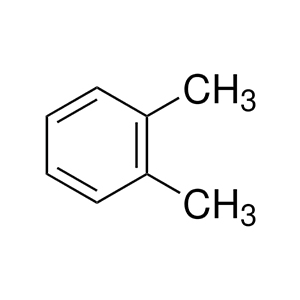 | 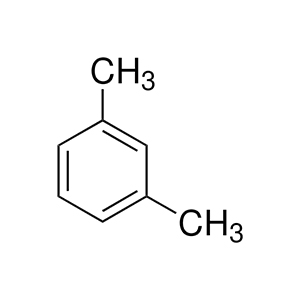 | 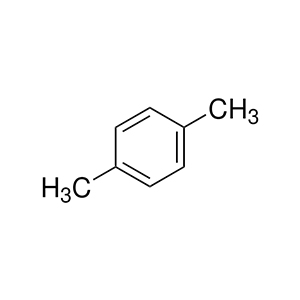 |
| methyl groups at positions 1 and 2 | methyl groups at positions 1 and 3 | methyl groups at positions 1 and 4 |
| ortho-Xylene or 1,2-dimethylbenzene | meta-Xylene or 1,3-dimethylbenzene | para-Xylene or 1,4-dimethylbenzene |
These positional differences constitute positional isomerism. The prefixes ortho, meta and para indicate the relationship between the substituents on the aromatic ring. Because the molecular formula is identical, the isomers have the same molecular weight, yet differences in molecular symmetry and crystal-packing behavior produce distinct melting points and somewhat different boiling points. Industrial buyers should therefore treat them as separate products rather than interchangeable grades of “xylene.”
Comparison of o-Xylene, m-Xylene and p-Xylene
The following table summarizes key identifiers, approximate physical properties and principal downstream routes. The values are general reference figures. The current SDS, COA and approved product specification should always be consulted before purchasing, storing or handling a commercial grade.
| Parameter | o-Xylene | m-Xylene | p-Xylene |
|---|---|---|---|
| Alternative name | ortho-Xylene | meta-Xylene | para-Xylene |
| Systematic name | 1,2-Dimethylbenzene | 1,3-Dimethylbenzene | 1,4-Dimethylbenzene |
| CAS number | 95-47-6 | 108-38-3 | 106-42-3 |
| Molecular formula | C₈H₁₀ | C₈H₁₀ | C₈H₁₀ |
| Methyl-group positions | 1,2 | 1,3 | 1,4 |
| Approximate molecular weight | 106.17 g/mol | 106.17 g/mol | 106.17 g/mol |
| Physical state under typical indoor conditions | Colorless liquid | Colorless liquid | Colorless liquid above its melting point; may crystallize below approximately 13℃ |
| Approximate melting point | -25℃ | -48℃ | 13℃ |
| Approximate boiling point | 144℃ | 139℃ | 138℃ |
| Principal industrial intermediate | Phthalic anhydride | Isophthalic acid | Purified terephthalic acid (PTA) or dimethyl terephthalate (DMT) |
| Major downstream sectors | Plasticizers, alkyd resins and coatings | Unsaturated polyester resins, coatings and specialty polyesters | PET resin, polyester fiber and polyester film |
| Key handling consideration | Flammable liquid; confirm ventilation, ignition control and current SDS requirements | Flammable liquid; confirm ventilation, ignition control and current SDS requirements | Flammable liquid with additional crystallization and temperature-management considerations |
| Aure Chemical product page | o-Xylene product specifications and supply | m-Xylene product specifications and supply | p-Xylene product specifications and supply |
Individual Xylene Isomers vs Mixed Xylenes
The commercial term “xylene” does not always identify a purified individual isomer. It may refer to mixed xylenes, which generally contain a combination of o-Xylene, m-Xylene and p-Xylene together with ethylbenzene and other components at source-dependent concentrations. A mixed-xylene stream is therefore materially different from a specified single-isomer product.
This distinction is important in procurement. A phthalic anhydride producer normally requires an o-Xylene feedstock that meets an approved composition, while an isophthalic acid producer requires m-Xylene and a PTA producer requires p-Xylene. Mixed xylenes should not be assumed to meet those process requirements merely because all three isomers share the same molecular formula.
When an inquiry states only “xylene,” the buyer and supplier should confirm the required CAS number, isomer distribution, assay, permitted ethylbenzene content, intended use and analytical method. This clarification helps prevent quotation errors, unsuitable sampling and avoidable qualification work. A single isomer and mixed xylenes should never be substituted for one another without technical approval from the end user.
Why Do the Three Xylene Isomers Have Different Physical Properties?
The three xylene isomers have identical molecular formulas and molecular weights, but they differ in molecular symmetry and solid-state packing. p-Xylene is the most symmetrical. Its para arrangement allows molecules to pack more efficiently into a crystal lattice, giving it a substantially higher melting point than the ortho and meta isomers.
The boiling points are much closer because the liquid-to-vapor transition is governed by intermolecular forces that are broadly similar across all three compounds. The practical consequences of the melting-point difference are particularly important for p-Xylene:
p-Xylene can crystallize in storage tanks, ISO tanks, transfer lines, valves or pumps during cool weather.
Winter transport and unloading require advance planning for insulation, heating capability and product temperature.
Receiving facilities should confirm that tanks, pipelines and unloading systems are suitable for the expected product condition.
o-Xylene and m-Xylene have much lower melting points and normally present less crystallization risk under ordinary ambient conditions.
Handling note: Fixed heating or unloading temperatures should not be copied from a general article. The required conditions must be confirmed against the current product SDS, tank design, carrier instructions and the receiving plant’s operating procedure.
Major Industrial Applications of Xylene Isomers
The three isomers are not commercially interchangeable. Each is associated with a distinct oxidation route and downstream value chain.
o-Xylene Applications
o-Xylene is an established feedstock for phthalic anhydride production. Phthalic anhydride is subsequently used in plasticizer chemistry, alkyd resins, coatings and other industrial intermediates. Feedstock composition and batch consistency can affect phthalic anhydride production performance and final product quality. Acceptable impurity limits should therefore be evaluated against the buyer’s oxidation process and approved feedstock specification.
o-Xylene may also be considered for certain solvent and formulation uses, but suitability depends on the customer’s technical specification, regulatory requirements and process validation. Buyers evaluating the main oxidation route can review o-Xylene for phthalic anhydride production . Aure Chemical can evaluate requests for bulk o-Xylene supply based on the required specification, quantity, packing, destination and current source availability.
m-Xylene Applications
m-Xylene is oxidized to isophthalic acid, an intermediate used in unsaturated polyester resins, coatings and specialty polyester systems. It normally enters these downstream applications through isophthalic acid rather than being directly added to every resin or coating formulation.
Compared with p-Xylene, m-Xylene is generally treated as a more specialized sourcing product because its principal downstream market is smaller and high-purity single-isomer availability may be more limited. The permitted levels of residual o-Xylene, p-Xylene, ethylbenzene and other impurities should be confirmed against the acid producer’s approved specification and analytical method.
Technical buyers may consult m-Xylene for isophthalic acid production . Aure Chemical can review inquiries for industrial m-Xylene supply subject to the requested assay, impurity profile, quantity, packaging and current availability.
p-Xylene Applications
p-Xylene is the principal feedstock for purified terephthalic acid and dimethyl terephthalate. These intermediates are polymerized into polyethylene terephthalate used in PET resin, polyester fiber and polyester film. p-Xylene therefore reaches the polyester value chain through PTA or DMT rather than being directly added to finished PET products.
The global PTA and polyester industries make p-Xylene a large-volume commodity product. Nevertheless, purity, isomer distribution, storage temperature and supply scale remain important commercial considerations. Its relatively high melting point also means that the logistics plan must address possible crystallization during transport and unloading.
Additional technical information is available in p-Xylene for PTA and DMT production . Aure Chemical can evaluate bulk p-Xylene supply according to the required quantity, source availability, packaging, transport route and commercial feasibility.
How to Select the Right Xylene Isomer
| Buyer requirement | Generally relevant isomer | Reason | Additional information to confirm |
|---|---|---|---|
| Phthalic anhydride production | o-Xylene | Established feedstock route | Assay, impurity profile, analytical method and plant qualification |
| Isophthalic acid production | m-Xylene | Established feedstock route | Isomer purity, residual o-/p-Xylene, ethylbenzene and approved specification |
| PTA or DMT production | p-Xylene | Established feedstock route | Purity, isomer distribution, supply scale and storage conditions |
| PET or polyester value chain | p-Xylene | Used through PTA or DMT intermediates | Intermediate route, technical approval and logistics feasibility |
| Industrial solvent use | Application-dependent | Solvency, volatility, composition and regulations must match the formulation | Customer specification, intended use and regulatory status |
| High-purity single-isomer requirement | The specified isomer | Mixed xylenes normally do not provide a defined single-isomer composition | Assay, impurity limits, analytical method and lot consistency |
| Low-temperature transport of p-Xylene | p-Xylene with temperature-managed logistics | It may crystallize below approximately 13℃ | Tank insulation, heating capability, transit conditions and unloading procedure |
Final selection must be based on the intended process, customer specification, purity requirements, impurity profile, plant qualification and applicable regulations. One isomer should never be substituted for another without formal technical and process validation.
Xylene Purity and Quality Requirements
The word “xylene” may refer to mixed xylenes, a stream enriched in one isomer, or a purified individual isomer. Buyers should clearly identify the required product and confirm the quality parameters that matter to their process. Depending on the approved source and grade, the specification may include:
Assay or purity.
Individual isomer distribution and limits for residual o-Xylene, m-Xylene or p-Xylene.
Ethylbenzene content.
Water content.
Color.
Non-volatile residue.
Acidity, where relevant.
Sulfur or other trace impurities, where relevant.
Analytical method and reporting basis.
Lot-to-lot consistency and sampling requirements.
Specification limits are not universal. They depend on the producer, grade, buyer’s application and any quality agreement in force. Buyers can use the xylene specifications and procurement checklist to prepare the technical and commercial information required for supplier evaluation.
Bulk Packaging and Transportation of Xylene
Possible commercial supply formats include steel drums where suitable, road tankers, buyer-provided ISO tanks, supplier-arranged ISO tanks and larger bulk arrangements. Actual availability depends on the individual isomer, approved source, shipment quantity, destination, local infrastructure and dangerous-goods acceptance.
ISO tank loading quantity is determined by tank design, product density, permitted filling ratio and applicable transport rules. A single fixed loading quantity should not be applied to every tank or every xylene isomer. Air freight is generally not the normal transport option for commercial bulk quantities, and dangerous-goods shipments must be handled by qualified parties.
In Aure Chemical’s usual operating model, a buyer-provided ISO tank may be considered for certain FCA or FOB transactions. Where Aure Chemical is requested to arrange the tank and ocean freight, CFR or CIF terms may be evaluated, subject to equipment availability, route feasibility and dangerous-goods acceptance. Incoterms alone do not determine tank ownership, leasing responsibility or tank-operating arrangements.
More detail is available in the guide to bulk xylene packaging and ISO tank transportation .
Safety, Storage and Handling Considerations
Xylene isomers are volatile and flammable aromatic hydrocarbons. Exposure, storage and transport controls should be based on the current SDS, site risk assessment and local regulations. General industrial precautions commonly include:
Adequate ventilation and vapor control.
Strict control of heat, sparks, flames and other ignition sources.
Grounding and bonding during transfer operations.
Compatible storage tanks, seals, hoses and containers.
Appropriate personal protective equipment.
Spill containment, emergency response and waste-handling procedures.
Use of qualified dangerous-goods carriers and approved transport equipment.
p-Xylene needs additional temperature-management attention because it may crystallize near ordinary ambient conditions. The supplier’s current SDS, the tank operator’s instructions and the receiving plant’s operating procedure take precedence over the general information on this page.
Information to Provide When Requesting a Xylene Quotation
A complete request for quotation allows the supplier to evaluate source availability, specification compatibility, packaging feasibility, dangerous-goods logistics, lead time and commercial terms. Industrial buyers should provide:
Product name and CAS number.
Required assay, specification or approved reference grade.
Intended industrial application.
Initial order quantity.
Trial quantity and estimated annual demand, if applicable.
Preferred packaging or bulk-delivery format.
Whether the buyer can provide a suitable ISO tank.
Destination country, delivery point and seaport where relevant.
Required Incoterm.
Required documents, such as COA, SDS, TDS or analytical data.
Required shipment schedule.
Proposed payment terms.
Importer and end-user information where compliance review is required.
Providing this information at the beginning of the inquiry helps prevent quotations based on the wrong isomer, unsuitable packaging or an impractical transport route.
Xylene Supply from Aure Chemical
Aure Chemical works with qualified Chinese producers and supply partners to support international buyers requiring o-Xylene, m-Xylene or p-Xylene. The company acts as a China-based chemical supplier, distributor and export partner rather than representing itself as the original manufacturer of every listed product.
Supply feasibility depends on the requested isomer, specification, quantity, packaging, destination, current source availability and logistics acceptance. Depending on the project, Aure Chemical may support product-source evaluation, COA and SDS review, packaging confirmation, export-document coordination, dangerous-goods logistics evaluation, and discussion of FCA, FOB, CFR or CIF terms where operationally feasible.
o-Xylene CAS 95-47-6
Product information and supply evaluation for industrial o-Xylene inquiries.m-Xylene CAS 108-38-3
Product information and supply evaluation for industrial m-Xylene inquiries.p-Xylene CAS 106-42-3
Product information and supply evaluation for industrial p-Xylene inquiries.
Other related products can be reviewed in the Aure Chemical aromatics product range .
Frequently Asked Questions About Xylene Isomers
What are the three xylene isomers?
The three xylene isomers are o-Xylene (1,2-dimethylbenzene, CAS 95-47-6), m-Xylene (1,3-dimethylbenzene, CAS 108-38-3) and p-Xylene (1,4-dimethylbenzene, CAS 106-42-3). They share the formula C₈H₁₀ but differ in the positions of their methyl groups on the aromatic ring.
What is the difference between o-Xylene, m-Xylene and p-Xylene?
The main differences are methyl-group position, molecular symmetry, melting point and industrial application. o-Xylene is primarily associated with phthalic anhydride, m-Xylene with isophthalic acid, and p-Xylene with PTA or DMT. p-Xylene also has a much higher melting point and may require temperature-managed logistics.
Which xylene isomer is used to produce phthalic anhydride?
o-Xylene is the established feedstock for phthalic anhydride. The resulting intermediate is used in downstream products including plasticizers, alkyd resins and coating materials. The required feedstock specification depends on the producer’s approved process and impurity limits.
Which xylene isomer is used to produce isophthalic acid?
m-Xylene is oxidized to isophthalic acid. Isophthalic acid is used in unsaturated polyester resins, coatings and specialty polyester systems. Buyers should confirm the required m-Xylene assay, residual isomer limits and analytical method.
Which xylene isomer is used for PTA and PET production?
p-Xylene is the principal feedstock for purified terephthalic acid and dimethyl terephthalate. PTA or DMT is then used to manufacture PET resin, polyester fiber and polyester film. p-Xylene is not normally added directly to finished PET products.
Why does p-Xylene have a higher melting point?
p-Xylene has a more symmetrical molecular structure than o-Xylene and m-Xylene. This symmetry permits more efficient crystal packing, producing a melting point near 13℃. As a result, it may crystallize during cool-weather storage or transportation.
Are xylene isomers interchangeable?
No. Individual processes normally require a specified isomer and impurity profile. Mixed xylenes or a different individual isomer should not be substituted without formal technical approval, plant qualification and process validation.
Can xylene be shipped in an ISO tank?
ISO tank shipment can be considered for bulk xylene, subject to the product, tank design, permitted filling ratio, route, carrier acceptance and destination requirements. p-Xylene may also require suitable temperature-management capability because of its crystallization behavior.
What information is required for a bulk xylene quotation?
Buyers should provide the product name and CAS number, specification, quantity, packaging preference, destination, Incoterm, shipment schedule, intended application and required documents. For ISO tank shipments, the buyer should also state whether it will provide the tank.
Request a Xylene Supply Evaluation
Industrial buyers seeking o-Xylene, m-Xylene or p-Xylene may contact Aure Chemical with the required product name, CAS number, specification, quantity, packaging, destination port, preferred Incoterm and requested delivery schedule. Aure Chemical will review source availability and logistics feasibility before preparing a quotation.
Email sales@aurechem.com