
GHS Classification: Acute Toxicity Oral (GHS06), Acute Toxicity Dermal (GHS06), Acute Toxicity Inhalation (GHS06), Skin Corrosion (GHS05), Serious Eye Damage (GHS05), Skin Sensitization (GHS07), Environmental Hazard (GHS09)
Hazard Statements: Harmful if swallowed; Toxic in contact with skin; Fatal if inhaled; Causes severe skin burns and eye damage; May cause an allergic skin reaction; Toxic to aquatic life with long lasting effects.
UN Number: UN 2928
Hazard Class: 6.1 (Toxic substances)
Packing Group: II
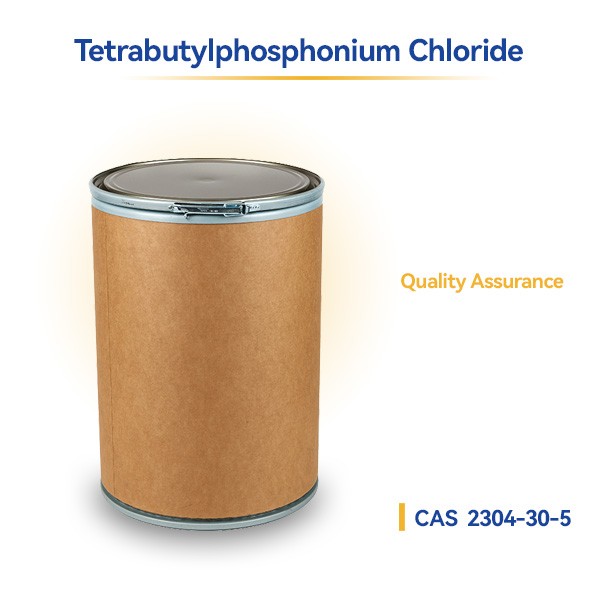
Tetrabutylphosphonium Chloride CAS 2304-30-5
Aure Chemical Delivers Excellence in Tetrabutylphosphonium Chloride
Tetrabutylphosphonium Chloride (TBPC) (CAS 2304-30-5) is a highly utilized quaternary phosphonium salt and a powerful Phase-Transfer Catalyst (PTC). It typically appears as a white, hydroscopic crystalline powder or solid with virtually no odor. TBPC's primary function is to efficiently transfer the chloride anion or other nucleophilic anions from an aqueous or solid phase into a non-polar organic solvent phase, thereby accelerating reactions that would otherwise be sluggish . Its robust chemical structure, high thermal stability, and low toxicity make it superior to many traditional ammonium-based catalysts. TBPC is also a key precursor in the synthesis of specialized ionic liquids and plays a role as an electrolyte component.
Basic Information of TBPC
Meticulously produced and rigorously tested to meet stringent quality standards. We ensure exceptional purity and consistent performance, essential for your critical applications:
| CAS No.: | 2304-30-5 |
|---|---|
| EC No.: | 218-964-8 |
| Linear Formula: | C16H36ClP |
| Molecular Weight: | 294.88 |
| Appearance: | White crystalline solid |
| Odor: | Little to none |
| Melting Point: | 62-66 °C (dec.) (lit.) |
| Boiling Point: | 344.8℃[at 101 325 Pa] |
| Density: | 0.978[at 20℃] |
| Solubility: | Highly soluble in water, ethanol, chloroform; soluble in many polar organic solvents. |
| Flash Point: | 4°C (39°F) |
| RIDADR: | UN 2928 6.1/PG 2 |
| Chemical Structure: | 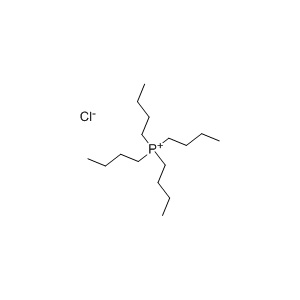 |
Application Overview
TBPC's superior performance in facilitating interfacial reactions and its thermal stability make it invaluable across industrial and research chemistry:
Phase-Transfer Catalysis (PTC): Used extensively in nucleophilic substitution, alkylation, epoxidation, and oxidation reactions. It is often preferred for reactions involving heat or strong bases due to the phosphonium cation's higher thermal and chemical stability compared to ammonium salts.
Ionic Liquid Precursor: Serves as a fundamental cation precursor in the synthesis of a wide variety of bespoke ionic liquids (ILs), where the P(C₄H₉)₄⁺ cation is paired with various anions to create non-volatile, stable, and recyclable solvents.
Polymer Science: Employed as a catalyst or co-catalyst in the synthesis of polyurethanes, polycarbonates, and specialized epoxy resins, often improving reaction rate and molecular weight control.
Electrochemistry: Its high solubility and stability in non-aqueous solvents make it a common choice as a supporting electrolyte in electrochemical studies of organic materials, sensors, and battery research.
Why Choose Aure Chemical for Tetrabutylphosphonium Chloride?
Aure Chemical offers TBPC (CAS 2304-30-5) with specialized quality assurance focused on maximizing its catalytic efficiency and maintaining its high purity and integrity.
Ultra-Low Water Content: TBPC is inherently hygroscopic. We utilize a vacuum-drying and specialized packaging process to ensure extremely low residual moisture content, which is critical for its performance in water-sensitive organic synthesis and non-aqueous applications like IL synthesis.
High Catalytic Purity: We rigorously control the synthesis to minimize organic impurities and residual tertiary phosphine starting material. This guarantees a clean, highly active quaternary phosphonium salt that provides predictable catalytic performance batch after batch.
Particle Size Control for Dissolution: We offer options for controlled particle size distribution to optimize for different uses—fine powder for solid-liquid catalysis or larger crystals for high-purity dissolution in liquid systems, ensuring ease of use and formulation predictability.
Dedicated Packaging for Hydroscopicity: TBPC is shipped in triple-layer, moisture-barrier packaging that is purged with dry nitrogen and sealed. This ensures the material remains free-flowing and maintains its ultra-low water content right up to the point of use in your lab or manufacturing plant.
Hazards Classification




Packaging, Logistics & Compliance Capabilities
Aure Chemical provides flexible packaging solutions, compliant logistics arrangements, and controlled storage practices to support laboratory-scale, pilot-scale, and commercial-scale global supply.
Packaging Options
- 25 kg / 50 kg bags (fiber drum, aluminum bag, HDPE drum)
- 100 kg / 200 kg steel or HDPE drums
- 500 kg / 1000 kg IBC containers
- Bulk liquids in ISO tank containers
- Customized packaging upon request
Transportation Modes
- Sea freight (FCL / LCL)
- Air freight for selected products
- Road and rail transportation
- Dangerous & non-dangerous cargo handling
- Incoterms: EXW, FOB, CFR, CIF, DAP, DDP
Storage & Handling
- Dry, cool, and well-ventilated warehouses
- Segregation by hazard class
- FIFO inventory management
- Temperature-controlled storage if required
- Regular inspection & labeling control
Documentation & Compliance
- Safety Data Sheet (SDS)
- Certificate of Analysis (COA)
- Dangerous Goods Declaration (DGD)
- Packing List & Commercial Invoice
- IMDG / IATA / ADR compliant labeling
For packaging customization or logistics consultation, please contact us.
INQUIRY