
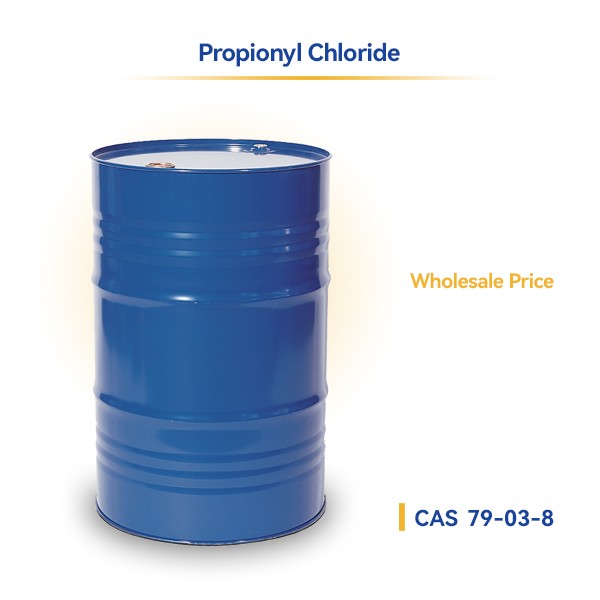
Propionyl Chloride CAS 79-03-8
Aure Chemical Delivers Reliable Propionyl chloride (CAS 79-03-8) at Consistent Quality
Propionyl chloride (CAS 79-03-8), also known as propanoyl chloride, is a reactive acyl chloride widely utilized as a key intermediate and propionylating agent in organic synthesis. This colorless to pale yellow liquid with a pungent odor serves industries requiring precise introduction of the propionyl group in high-value chemical manufacturing.
Basic Information
| CAS No. | 79-03-8 |
|---|---|
| EC No. | 201-170-0 |
| Linear Formula | CH3CH2COCl |
| Molecular Weight | 92.52 g/mol |
| Appearance | Colorless liquid |
| Melting Point | -94 °C (lit.) |
| Boiling point | 77-79 °C (lit.) |
| Density | 1.059 g/mL at 25 °C (lit.) |
| RIDADR | UN 1815 Class 3 (8) Packing Group II |
| Chemical Structure | 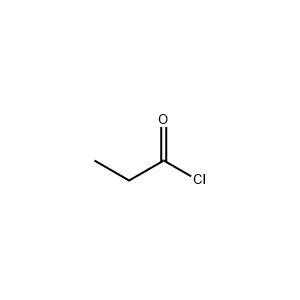 |
Key Applications
Pharmaceutical intermediates: Critical acylating agent used in the synthesis of active pharmaceutical ingredients and drug precursors requiring the propionyl moiety.
Agrochemical production: Key building block for manufacturing herbicides, insecticides, and other crop protection agents.
Organic synthesis reagent: Preferred propionylating agent for preparation of esters, amides, and ketones in both laboratory and industrial scales.
Specialty chemicals & dyes: Employed in the production of pigments, dyes, and fine chemicals through efficient acylation reactions.
Research & development: Essential reagent in medicinal chemistry and material science for targeted propionyl group introduction.
Aure Chemical: Your Reliable Partner
Strict Quality Assurance: Each batch undergoes rigorous testing with Certificate of Analysis (COA) guaranteeing ≥98% purity and consistent specifications.
Global Supply Network: Efficient logistics ensuring stable bulk supply and on-time delivery to customers worldwide.
Full Compliance Support: Comprehensive SDS, MSDS, and regulatory documentation provided for safe handling and international trade.
Dedicated Technical Service: Expert team available for product inquiries, custom packaging, and application guidance.
Hazards Classification
GHS Classification: Flammable liquids Category 2; Skin corrosion Category 1B; Serious eye damage Category 1; Acute toxicity (oral) Category 4; Acute toxicity (inhalation - vapors) Category 3; Specific target organ toxicity (single exposure) Category 3 (respiratory tract irritation).
Hazard Statements: H225 Highly flammable liquid and vapor; H302 Harmful if swallowed; H314 Causes severe skin burns and eye damage; H331 Toxic if inhaled; H335 May cause respiratory irritation.
UN Number: 1815
Hazard Class: 3 (Flammable liquids) with subsidiary risk 8 (Corrosive)
Packing Group: II




Moisture-sensitive material. Reacts violently with water releasing toxic HCl gas. Store in a cool, dry, well-ventilated area under inert atmosphere in tightly closed containers. Keep away from heat, sparks, open flames, bases, and oxidizers. Use only in fume hood with appropriate PPE.
Packaging, Logistics & Compliance Capabilities
Aure Chemical provides flexible packaging solutions, compliant logistics arrangements, and controlled storage practices to support laboratory-scale, pilot-scale, and commercial-scale global supply.
Packaging Options
- 25 kg / 50 kg bags (fiber drum, aluminum bag, HDPE drum)
- 100 kg / 200 kg steel or HDPE drums
- 500 kg / 1000 kg IBC containers
- Bulk liquids in ISO tank containers
- Customized packaging upon request
Transportation Modes
- Sea freight (FCL / LCL)
- Air freight for selected products
- Road and rail transportation
- Dangerous & non-dangerous cargo handling
- Incoterms: EXW, FOB, CFR, CIF, DAP, DDP
Storage & Handling
- Dry, cool, and well-ventilated warehouses
- Segregation by hazard class
- FIFO inventory management
- Temperature-controlled storage if required
- Regular inspection & labeling control
Documentation & Compliance
- Safety Data Sheet (SDS)
- Certificate of Analysis (COA)
- Dangerous Goods Declaration (DGD)
- Packing List & Commercial Invoice
- IMDG / IATA / ADR compliant labeling
For packaging customization or logistics consultation, please contact us.