
Allyl Acetate CAS 591-87-7
Aure Chemical Delivers Reliable Allyl Acetate (CAS 591-87-7) at Consistent Quality
Allyl acetate is a colorless liquid ester featuring both an acetate group and a terminal allylic double bond. This structural combination provides useful reactivity for conversion into allyl alcohol and for participation in a range of allylic substitution and polymerization reactions. The compound is handled as a flammable liquid and requires appropriate precautions during storage and use.
Basic Information
| CAS No. | 591-87-7 |
|---|---|
| EC No. | 209-734-8 |
| Linear Formula | CH3COOCH2CH=CH2 |
| Molecular Weight | 100.12 g/mol |
| Appearance | Colorless to almost colorless clear liquid |
| Melting Point | -96 °C (lit.) |
| Boiling point | 103–104 °C (lit.) |
| Density | 0.93 g/mL at 20 °C (lit.) |
| RIDADR | UN 2333 Class 3 / PG II |
| Chemical Structure | 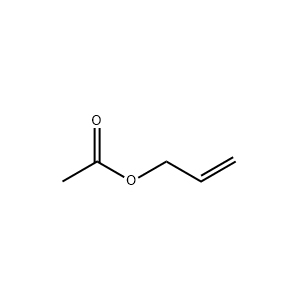 |
Key Applications
Primary precursor to allyl alcohol: Allyl acetate is a key industrial raw material for the production of allyl alcohol through hydrolysis or related processes, supporting downstream manufacture of resins, plasticizers, and specialty chemicals.
Reactive intermediate in organic synthesis: The allylic structure makes it a versatile building block for preparing allyl esters, ethers, and other functionalized compounds via substitution and rearrangement reactions.
Comonomer in polymer and resin production: It is employed in the synthesis of specialty polymers, acrylic resins, and copolymers where the allyl functionality contributes to crosslinking or property modification.
Component in industrial formulations: Allyl acetate finds limited use as a reactive solvent or diluent in certain coatings, adhesives, and chemical processing formulations that benefit from its solvency and reactivity profile.
Laboratory reagent for allylic chemistry: The compound serves as a convenient reagent in research and development laboratories for exploring allylic transformations and developing new synthetic methodologies.
Aure Chemical: Your Reliable Partner
Product Quality & Consistency: High-purity Allyl acetate is supplied with consistent specifications maintained through rigorous quality assurance procedures suitable for demanding synthetic applications.
International Logistics & Supply Stability: Stable export supply is supported by established logistics channels that enable reliable bulk deliveries and scheduling flexibility for customers worldwide.
Safety Documentation & Regulatory Compliance: Complete SDS, COA and dangerous goods documentation are provided to support safe handling, regulatory compliance and smooth international procurement.
Technical Support & Flexible Packaging: Professional technical assistance is available together with adaptable packaging solutions and bulk supply arrangements tailored to individual customer requirements.
Hazards Classification
Allyl acetate is classified as a highly flammable liquid and presents acute toxicity hazards by ingestion and inhalation. It is also harmful in contact with skin and causes serious eye irritation. Proper ventilation, grounding, and personal protective equipment are essential during handling and transfer operations.
GHS Classification: Flammable liquids (Category 2) — GHS02; Acute toxicity, oral (Category 3) — GHS06; Acute toxicity, inhalation (Category 2/3) — GHS06; Harmful in contact with skin — GHS07; Serious eye damage/eye irritation (Category 2) — GHS07
Hazard Statements: H225 — Highly flammable liquid and vapour; H301 + H331 — Toxic if swallowed or if inhaled; H312 — Harmful in contact with skin; H319 — Causes serious eye irritation.
UN Number: UN 2333
Hazard Class: 3 (Flammable liquids)
Packing Group: II


Packaging
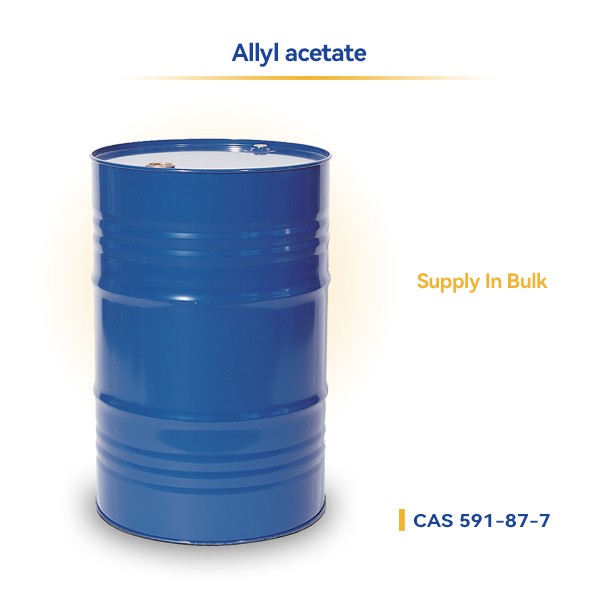
200 L steel drum
Final packaging, capacity and net weight are confirmed in the quotation and order.