
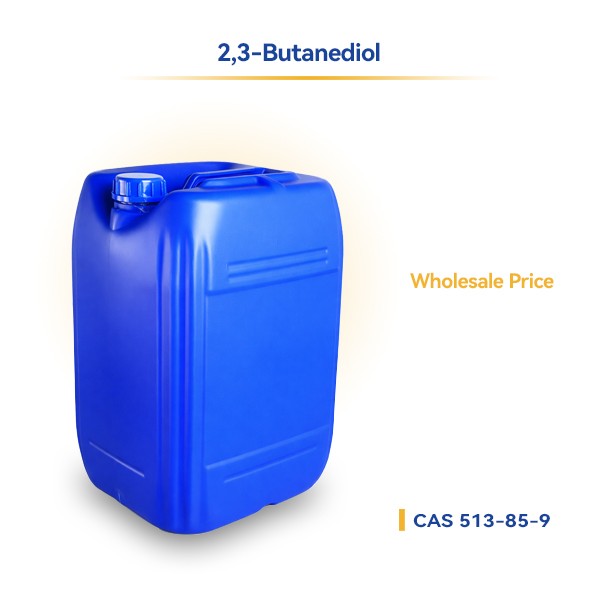
2,3-Butanediol CAS 513-85-9
High-Purity 2,3-Butanediol CAS 513-85-9 from Aure Chemical: Stable Supply & Compliance
2,3-Butanediol is a vicinal diol that functions as an important intermediate in organic synthesis and the manufacture of specialty chemicals. It is also employed as a solvent, humectant, and building block in polymer systems. Aure Chemical offers high-purity grades of this compound to support consistent results in industrial and research applications.
Basic Information
| CAS No. | 513-85-9 |
|---|---|
| EC No. | 208-173-6 |
| Linear Formula | CH3CH(OH)CH(OH)CH3 |
| Molecular Weight | 90.12 g/mol |
| Appearance | Colorless to pale yellow liquid or low-melting solid |
| Melting Point | 25 °C (lit.) |
| Boiling Point | 183–184 °C (lit.) |
| Density | 1.002 g/mL at 20 °C (lit.) |
| RIDADR | Not regulated as dangerous goods (typical) |
| Chemical Structure | 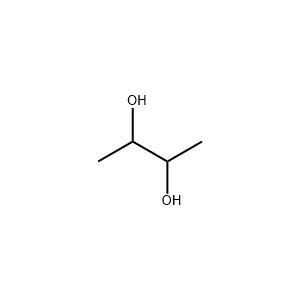 |
Key Applications
Key chemical intermediate for commodity chemicals: Widely used in dehydration processes to produce methyl ethyl ketone (MEK) and other industrial solvents and intermediates.
Solvent and humectant in industrial formulations: Employed in specialty solvents, inks, and blends where its solvency and moisture-retaining characteristics add value.
Building block in organic synthesis: Serves as a versatile starting material for the preparation of pharmaceuticals, agrochemicals, and fine chemicals through selective transformations.
Component in polymer and resin production: Utilized as a diol monomer or chain extender in polyurethanes, polyesters, and other specialty polymeric materials.
Research and bio-based chemical applications: Important in studies of fermentation-derived chemicals and sustainable routes to fuels, materials, and platform chemicals.
Aure Chemical: Your Reliable Partner
High purity specifications and strict batch consistency are maintained through rigorous QA procedures, delivering reliable performance in sensitive synthesis and formulation work.
Efficient international shipping and bulk supply capability ensure stable availability and timely delivery to customers operating in global chemical and polymer markets.
Complete SDS, COA and regulatory documentation available supports straightforward compliance with international safety and transportation standards for industrial use.
Professional technical communication and responsive service together with flexible packaging options help customers address specific volume, handling, and application requirements.
Hazards Classification
This substance is classified as a combustible liquid and may cause eye irritation. Standard industrial hygiene practices and appropriate protective equipment should be used during handling and storage.
GHS Classification: Combustible liquid; Eye Irritation Category 2B (GHS07)
Hazard Statements: H227 – Combustible liquid; H320 – Causes eye irritation.
UN Number: Not regulated as dangerous goods (typical)
Hazard Class: Not applicable
Packing Group: Not applicable

Packaging
25 L HDPE drum
Final packaging, capacity and net weight are confirmed in the quotation and order.