
Rhodium(III) 2-Ethylhexanoate CAS 25470-96-6
High-Purity Rhodium(III) 2-Ethylhexanoate from Aure Chemical – Your Trusted Source
Rhodium(III) 2-ethylhexanoate, commonly abbreviated as ROPAC or Rh₂(OOCC₇H₁₅)₆, CAS No. 25470-96-6, is a highly soluble rhodium(III) carboxylate precursor widely used in catalysis and materials processing. Supplied by Aure Chemical as a dark green to brownish viscous liquid or solid with high rhodium content (typically 10–12% Rh), this oil-soluble compound offers excellent compatibility with organic solvents and hydrocarbon media. It serves as an efficient Rh source for preparing supported rhodium catalysts via impregnation, generating homogeneous rhodium species for hydrogenation and hydroformylation, and depositing rhodium-based thin films or coatings in solution-based processes. Its long-chain carboxylate ligands provide superior solubility and stability compared to acetate or chloride analogs, making it ideal for non-aqueous systems in fine chemicals, automotive catalysts, and advanced material applications. Aure Chemical delivers precise Rh content control, low chloride impurities, and secure rhodium sourcing to ensure batch consistency and optimal performance in industrial and research settings worldwide.
Basic Information of Rhodium(III) 2-Ethylhexanoate
Aure Chemical supplies Rhodium(III) 2-Ethylhexanoate as a premium Rh(III) precursor with verified rhodium content and exceptional purity for catalytic and materials applications.
| CAS No. | 25470-96-6 |
|---|---|
| EC No. | 247-011-9 |
| Chemical Formula | Rh₂(O₂CC₇H₁₅)₆ |
| Molecular Weight | approx. 1076 g/mol |
| Appearance | Dark green to brownish viscous liquid or waxy solid |
| Odor | Slight carboxylic |
| Melting point | approx. 40–60 °C (softens) |
| Boiling point | Decomposes before boiling |
| Density | approx. 1.1–1.3 g/cm³ |
| Solubility | Highly soluble in hydrocarbons, toluene, hexane, alcohols; insoluble in water |
| Nature (hazards) | May cause skin and eye irritation, harmful if swallowed or inhaled, toxic to aquatic life with long lasting effects |
| RIDADR | UN 3077, Environmentally hazardous substance, liquid, n.o.s. (Rhodium(III) 2-ethylhexanoate), Class 9, Packing Group III |
| Chemical Structure | 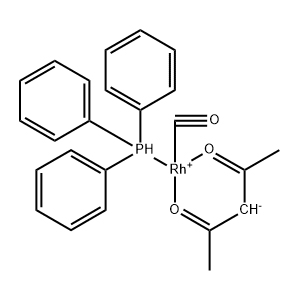 |
Aure Chemical offers customizable options including rhodium content specification (5–15% Rh typical), solvent blend (e.g., hexane, toluene), purity grades, and specialized packaging to meet your catalyst preparation, deposition, or synthesis requirements.
Primary Applications of Rhodium(III) 2-Ethylhexanoate
Rhodium(III) 2-Ethylhexanoate serves as a highly soluble Rh precursor, enabling efficient rhodium incorporation in non-aqueous catalytic and materials processes.
Supported Rhodium Catalyst Preparation
Used in organic-phase impregnation of carbon, alumina, or silica supports to create high-dispersion Rh catalysts for hydrogenation, hydroformylation, and automotive emission control.Homogeneous Hydrogenation Catalysis
Acts as a precursor for Rh species in selective hydrogenation of alkenes, alkynes, and carbonyls in hydrocarbon solvents, offering excellent activity in fine chemical synthesis.Thin-Film & Coating Deposition
Serves as a solution-based Rh source for spin-coating, dip-coating, or ink formulations to produce rhodium electrodes or catalytic films in microelectronics and sensors.Organometallic Rhodium Complex Synthesis
Enables preparation of mixed-ligand Rh complexes in non-polar media for mechanistic studies and functional organometallics in catalysis research.Electrocatalyst Development for Energy Applications
Facilitates synthesis of Rh-based electrocatalysts for oxygen reduction reaction (ORR) and hydrogen evolution in fuel cells and electrolyzers.Advanced Materials & Nanotechnology
Supports controlled reduction to generate rhodium nanostructures or functional coatings requiring high purity and controlled Rh loading.
Why Choose Aure Chemical for Your Rhodium(III) 2-Ethylhexanoate Supply?
Partner with Aure Chemical for Rhodium(III) 2-Ethylhexanoate to benefit from premium solubility, technical expertise, and secure rhodium supply for your catalytic and materials needs.
Accurate Rhodium Content Control
Precise analytical verification ensures uniform Rh content, low impurities, and batch reproducibility for reliable precursor performance.Secure Precious Metal Sourcing
Transparent, responsible rhodium procurement with inventory buffering to provide supply stability and competitive pricing.Technical Application Support
Experienced specialists offer guidance on dissolution, reduction protocols, catalyst activation, and process optimization tailored to your applications.Full Regulatory Compliance
Comprehensive COA, REACH, RoHS, and detailed SDS documentation to facilitate global operations and audits.Sustainability & Recycling Commitment
Ethical sourcing practices and rhodium recovery/recycling programs aligned with ESG objectives and circular economy principles.
Hazards Classification
GHS Classification: Skin Irritation (Category 2); Eye Irritation (Category 2A); Specific Target Organ Toxicity, Single Exposure (respiratory) (Category 3); Aquatic Chronic (Category 3)
Hazard Statements: H315: Causes skin irritation; H319: Causes serious eye irritation; H335: May cause respiratory irritation; H413: May cause long lasting harmful effects to aquatic life
UN Number: UN 3077
Hazard Class: 9 (Miscellaneous dangerous substances and articles)
Packing Group: III


Packaging, Logistics & Compliance Capabilities
Aure Chemical provides flexible packaging solutions, compliant logistics arrangements, and controlled storage practices to support laboratory-scale, pilot-scale, and commercial-scale global supply.
Packaging Options
- 25 kg / 50 kg bags (fiber drum, aluminum bag, HDPE drum)
- 100 kg / 200 kg steel or HDPE drums
- 500 kg / 1000 kg IBC containers
- Bulk liquids in ISO tank containers
- Customized packaging upon request
Transportation Modes
- Sea freight (FCL / LCL)
- Air freight for selected products
- Road and rail transportation
- Dangerous & non-dangerous cargo handling
- Incoterms: EXW, FOB, CFR, CIF, DAP, DDP
Storage & Handling
- Dry, cool, and well-ventilated warehouses
- Segregation by hazard class
- FIFO inventory management
- Temperature-controlled storage if required
- Regular inspection & labeling control
Documentation & Compliance
- Safety Data Sheet (SDS)
- Certificate of Analysis (COA)
- Dangerous Goods Declaration (DGD)
- Packing List & Commercial Invoice
- IMDG / IATA / ADR compliant labeling
For packaging customization or logistics consultation, please contact us.