

Phenylenediamine Isomers: OPD vs MPD vs PPD | Aure Chemical
Phenylenediamine Isomers: OPD vs MPD vs PPD
o-Phenylenediamine (OPD), m-phenylenediamine (MPD) and p-phenylenediamine (PPD) share the same molecular formula, C6H8N2, but they are distinct positional isomers. Their two amino groups occupy the 1,2- (ortho), 1,3- (meta) or 1,4- (para) positions on the benzene ring. That difference changes molecular geometry and the way each diamine participates in downstream chemistry, so the three materials are normally treated as separate raw materials rather than interchangeable grades of the same product.
For industrial users, the practical distinction is application-driven. OPD is strongly associated with heterocyclic intermediate chemistry, including benzimidazole routes. MPD is an important monomer in meta-aramid chemistry and is also used in selected aromatic-amine epoxy curing systems. PPD is closely associated with para-aramid manufacture, oxidative dye chemistry and the chemistry of substituted p-phenylenediamine rubber antioxidants. This guide compares the three phenylenediamine isomers and explains how technical and procurement teams can approach OPD vs MPD vs PPD selection.
Quick Comparison of OPD, MPD and PPD
| Attribute | OPD | MPD | PPD |
|---|---|---|---|
| Structure | 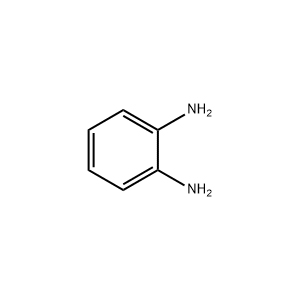 | 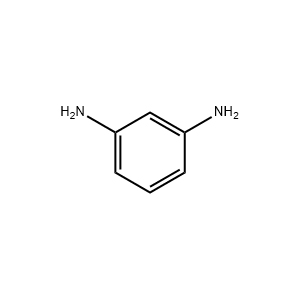 | 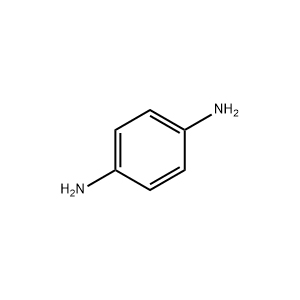 |
| Full name | o-Phenylenediamine / 1,2-phenylenediamine | m-Phenylenediamine / 1,3-phenylenediamine | p-Phenylenediamine / 1,4-phenylenediamine |
| Alternative name | 1,2-Diaminobenzene | 1,3-Diaminobenzene | 1,4-Diaminobenzene |
| CAS number | 95-54-5 | 108-45-2 | 106-50-3 |
| Molecular formula | C6H8N2 | C6H8N2 | C6H8N2 |
| Molecular weight | 108.14 g/mol | 108.14 g/mol | 108.14 g/mol |
| Amino-group arrangement | 1,2 — adjacent (ortho) | 1,3 — meta | 1,4 — opposite (para) |
| Representative industrial application families | Heterocyclic intermediates, especially benzimidazole chemistry; selected dye and specialty-organic intermediates | Meta-aramid chemistry; selected aromatic epoxy curing systems; dye/intermediate chemistry | Para-aramid chemistry; oxidative dye systems; substituted PPD antioxidant chemistry; dye/intermediate chemistry |
| Typical selection context | Specialty organic and heterocyclic synthesis | Meta-oriented aromatic polyamides and selected thermoset systems | Para-oriented aromatic polyamides, colorant chemistry and rubber-chemical value chains |
The table provides orientation rather than a universal grade-selection rule. Suitability depends on the downstream reaction, required impurity profile, process validation and applicable regulatory requirements.
What Are Phenylenediamine Isomers?
Phenylenediamines are aromatic diamines in which a benzene ring carries two primary amino groups. Moving one amino group around the ring produces three constitutional, or positional, isomers: 1,2-phenylenediamine, 1,3-phenylenediamine and 1,4-phenylenediamine. These are commonly abbreviated OPD, MPD and PPD.
Because all three compounds contain the same numbers of carbon, hydrogen and nitrogen atoms, they have the same molecular formula and nominal molecular weight. They do not, however, have the same connectivity. The relative positions of the amino groups affect molecular shape, symmetry, steric environment, intermolecular interactions and the geometry transferred into reaction products or polymer chains.
For a buyer, this distinction is more important than the shared formula. A process qualified around OPD may rely on the neighboring amino groups to build a fused heterocycle. A meta-aramid process requires the geometry introduced by MPD. A para-aramid process relies on PPD as the para-oriented diamine monomer. Therefore, purchasing “phenylenediamine” without specifying the correct isomer is chemically insufficient for most industrial applications.
Why Ortho, Meta and Para Positioning Matters
The ortho, meta and para arrangements do not create a simple universal ranking of reactivity. Instead, each arrangement makes particular reaction pathways or material architectures more favorable in a given chemical system.
Ortho: adjacent functional groups enable neighboring-group chemistry
In OPD, the amino groups sit next to each other. Their proximity makes the molecule especially useful when both nitrogens must participate in formation of a fused heterocycle. Benzimidazole synthesis is a representative example: the two neighboring amino groups can react with an appropriate carbon-containing partner to form the fused imidazole ring system. The same ortho relationship also influences oxidation and coordination behavior, although those effects depend on the reaction environment.
Meta: angular connectivity changes polymer architecture
In MPD, the amino groups occupy the 1,3 positions. When MPD is incorporated into an aromatic polyamide, the meta-oriented linkage gives a different chain geometry and packing behavior from a para-oriented system. This structural difference is central to the distinction between meta-aramid and para-aramid materials. MPD is also used as an aromatic amine curing agent in some epoxy systems, where formulation, stoichiometry and cure schedule determine the final thermoset properties.
Para: opposite functional groups support extended chain geometry
In PPD, the two amino groups occupy opposite positions on the aromatic ring. This para orientation is well suited to the formation of rigid, extended aromatic polyamide chains. Polycondensation of PPD with terephthaloyl chloride is a well-established route to poly(p-phenylene terephthalamide), or PPTA, the polymer family associated with high-performance para-aramid fibers.
The important procurement conclusion is that identical molecular formula does not imply equivalent process behavior. The correct isomer must be selected according to the chemistry being performed and then qualified against the application's own quality requirements.
o-Phenylenediamine (OPD): The Ortho Isomer
o-Phenylenediamine (OPD), CAS 95-54-5, is also known as 1,2-phenylenediamine or 1,2-diaminobenzene. Its defining feature is the adjacent arrangement of the two amino groups. That geometry makes OPD particularly useful as a building block for nitrogen-containing heterocycles.
OPD in benzimidazole and heterocyclic chemistry
A major reason chemists select OPD is its ability to participate in cyclocondensation routes that form benzimidazole frameworks. The exact reagents and mechanism depend on the target molecule, but the essential structural advantage is the availability of two neighboring amino groups that can be incorporated into the fused ring system. For a focused discussion of this application, see OPD in benzimidazole synthesis.
Benzimidazole derivatives appear across specialty-organic research and in downstream sectors such as pharmaceutical, agrochemical and functional-material chemistry. For procurement teams, the important point is not that every OPD grade serves every synthesis equally, but that impurity profile, color, moisture and consistency may become significant when the material is used in higher-value intermediate chemistry.
OPD in dye and specialty-intermediate chemistry
OPD also appears in selected dye, pigment and specialty-intermediate routes. In these applications, the relevant isomer is determined by the desired coupling, condensation or ring-forming chemistry rather than by the generic category “phenylenediamine.” The broader comparison is covered in phenylenediamines as dye and pigment intermediates.
For commercial specifications and supply information, refer to Aure Chemical's o-phenylenediamine (OPD) CAS 95-54-5 product page.
m-Phenylenediamine (MPD): The Meta Isomer
m-Phenylenediamine (MPD), CAS 108-45-2, is 1,3-phenylenediamine. Its meta arrangement makes it chemically distinct from both OPD and PPD and gives it particular importance in meta-oriented aromatic-polyamide chemistry.
MPD in meta-aramid chemistry
MPD is a key diamine associated with poly(m-phenylene isophthalamide), commonly abbreviated PMIA. In this polymer family, MPD is paired with isophthaloyl chloride to form a meta-oriented aromatic polyamide. The resulting chain architecture differs from para-aramid PPTA and therefore produces a different balance of material properties and end-use applications.
Buyers evaluating this value chain can continue with the dedicated guide to MPD for meta-aramid fiber manufacturing. For polymer-grade sourcing, the required specification should be determined by the downstream producer's validated process rather than by a generic purity number alone.
MPD in epoxy curing systems
MPD has also been used as an aromatic amine curing agent in epoxy chemistry. Its two primary amino groups provide multiple N-H sites capable of reacting with epoxide groups, enabling highly cross-linked networks. Final cure behavior and thermal, mechanical and chemical-resistance properties depend on the complete resin system, formulation, stoichiometry and curing conditions; they should not be inferred from the identity of MPD alone.
Further application-specific discussion is available in MPD as an aromatic epoxy curing agent. MPD also appears in selected dye and intermediate chemistry, where its role can be compared with the other two isomers in the phenylenediamine dye and pigment intermediate guide.
For commercial product information, see the m-phenylenediamine (MPD) CAS 108-45-2 product page.
p-Phenylenediamine (PPD): The Para Isomer
p-Phenylenediamine (PPD), CAS 106-50-3, is 1,4-phenylenediamine. The two amino groups are positioned opposite each other on the benzene ring, creating a comparatively linear para-oriented diamine.
PPD in para-aramid chemistry
One of the most important industrial uses of PPD is as a monomer for para-aramid chemistry. Reaction of PPD with terephthaloyl chloride produces PPTA, a rigid aromatic polyamide used in high-performance fiber and related material applications. The para-oriented chain architecture is fundamentally different from the meta-oriented PMIA system based on MPD.
For deeper discussion, see PPD for para-aramid fiber manufacturing. Buyers comparing the two aramid families can also review PPD vs MPD in aramid fiber production.
PPD and substituted rubber-antioxidant chemistry
PPD must be distinguished from downstream N,N'-substituted p-phenylenediamine antioxidants such as 6PPD and IPPD. These are separate chemical substances with their own CAS numbers, specifications, hazards and regulatory considerations. They belong to the broader substituted PPD chemical family; the parent compound p-phenylenediamine should not be described as though it were itself 6PPD or IPPD.
The distinction is explained in more detail in PPD and p-phenylenediamine-type rubber antioxidant chemistry.
PPD in dye and oxidative colorant systems
PPD is also used in colorant chemistry, including oxidative dye systems. For industrial buyers, this is a regulated end-use area in which product suitability cannot be established from chemical identity alone. Market-specific composition, documentation, toxicological and regulatory requirements must be evaluated separately. Aure Chemical's application content is intended for B2B raw-material discussion rather than consumer-use guidance.
Application-specific information is available in PPD in oxidative hair dye manufacturing and in the broader comparison of OPD, MPD and PPD in dye and pigment intermediate chemistry.
For product specifications and commercial supply information, refer to the p-phenylenediamine (PPD) CAS 106-50-3 product page.
OPD vs MPD vs PPD: Side-by-Side Comparison
| Dimension | OPD | MPD | PPD |
|---|---|---|---|
| Amino-group arrangement | 1,2 — ortho | 1,3 — meta | 1,4 — para |
| Key structural implication | Neighboring amino groups can participate in fused-ring formation | Meta geometry produces an angular aromatic-polyamide linkage | Para geometry supports extended, rigid aromatic-polyamide chains |
| Representative chemistry | Heterocyclic condensation and specialty-intermediate synthesis | Meta-aramid polycondensation; selected epoxy curing | Para-aramid polycondensation; oxidative dye and substituted PPD chemistry |
| Representative application cluster | Benzimidazoles and related heterocycles | Meta-aramids, selected thermoset systems | Para-aramids, colorants, rubber-chemical value chains |
| Can it normally replace another isomer? | No; process-specific validation would be required | No; process-specific validation would be required | No; process-specific validation would be required |
This comparison explains why the question “Which phenylenediamine is better?” is usually not meaningful without an application. Each isomer is better understood as a different chemical building block selected for a different structural requirement.
Phenylenediamines in Aramid Fiber Chemistry
Aramid chemistry provides one of the clearest examples of why positional isomerism matters. PPD and MPD are both aromatic diamines, but they lead to different aromatic polyamide architectures.
In para-aramid chemistry, PPD is combined with terephthaloyl chloride to form PPTA. The para-oriented monomers generate highly extended chains that can organize into strongly oriented structures. These materials are associated with high tensile strength and modulus in demanding fiber and composite applications.
In meta-aramid chemistry, MPD is combined with isophthaloyl chloride to form PMIA. Its meta-oriented structure produces a different chain geometry and packing behavior, giving the resulting material a different property profile and application set. Meta-aramids are particularly associated with heat-resistant and flame-resistant textile and insulation applications.
The distinction should not be reduced to a claim that one aramid is universally “better” than the other. Para-aramid and meta-aramid systems are engineered for different combinations of properties. For a fuller monomer and procurement comparison, see the comparison of PPD and MPD in aramid fiber production.
Phenylenediamines as Chemical Intermediates
Outside aramid production, OPD, MPD and PPD are used as building blocks in different branches of specialty and industrial chemistry. Their value lies not in belonging to one generic “aromatic diamine” category, but in the specific reaction geometry each isomer provides.
OPD: particularly important when adjacent amino groups are required for heterocyclic ring formation, including benzimidazole chemistry.
MPD: relevant to meta-oriented aromatic polyamides, selected epoxy curing systems and certain colorant/intermediate routes.
PPD: relevant to para-oriented aromatic polyamides, oxidative dye chemistry and substituted p-phenylenediamine chemical families.
In dye and pigment chemistry, all three isomers may appear in different routes, but they should not be grouped as interchangeable inputs. The target molecular structure determines which positional isomer is required. See the dedicated guide to phenylenediamines as dye and pigment intermediates.
How to Choose Between OPD, MPD and PPD
The most useful starting point is the downstream chemistry. A procurement team should first identify the reaction or material family, then confirm the exact chemical identity and specification required by the technical team.
| Application or chemistry | Isomer commonly evaluated | Reason for selection |
|---|---|---|
| Benzimidazole and related fused heterocyclic synthesis | OPD | Adjacent amino groups support the required cyclization geometry |
| Meta-aramid / PMIA | MPD | Meta-oriented diamine for the target aromatic polyamide architecture |
| Para-aramid / PPTA | PPD | Para-oriented diamine for an extended aromatic polyamide chain |
| Selected aromatic epoxy curing systems | MPD | Primary aromatic diamine functionality used in selected cure formulations |
| Substituted PPD rubber-antioxidant value chain | PPD-related chemistry | Parent p-phenylenediamine framework underlies the substituted PPD family; individual downstream products are distinct chemicals |
| Dye / pigment intermediate chemistry | OPD, MPD or PPD depending on target | Selection depends on the required coupling, oxidation, condensation or substitution pattern |
| Industrial oxidative dye systems | PPD in relevant formulations | Established oxidative-intermediate chemistry, subject to end-use and market-specific requirements |
This table is a screening guide, not a substitute for process qualification. Even after the correct isomer is identified, the acceptable grade can differ substantially between polymer manufacture, specialty intermediate synthesis and formulation applications.
Quality and Procurement Considerations
A professional sourcing decision should go beyond a single headline assay. Two lots both described as “99% phenylenediamine” may not be equivalent for a sensitive downstream process if they differ in moisture, positional-isomer impurities, other organic impurities, oxidation history, analytical method or batch consistency.
1. Assay and analytical method
Buyers should confirm how the main-component assay is measured and whether the reported method is suitable for distinguishing relevant impurities. A high assay value does not automatically describe the entire impurity profile. For qualification work, the analytical method and the identities of critical impurities can be as important as the headline purity.
2. Positional-isomer impurities
Because OPD, MPD and PPD have the same molecular formula and closely related chemical character, a process may need specific control of the undesired positional isomers. This is particularly relevant where monomer geometry determines polymer structure or where side products are difficult to remove after reaction.
3. Moisture
Water requirements depend strongly on the downstream process. Moisture may be critical in some reactive monomer or polymer systems, while other applications may tolerate higher levels. Buyers should therefore specify a water limit only when it reflects the validated process rather than copying a number from an unrelated grade.
4. Appearance, color and oxidation history
Aromatic amines can undergo color changes during storage and exposure to air, light or other conditions. Appearance should be interpreted together with assay and impurity data rather than used as the sole indicator of quality. Where color is important to the downstream product, an agreed analytical or visual specification may be needed.
5. Lot-to-lot consistency
A successful laboratory sample does not automatically establish long-term commercial consistency. Industrial buyers should consider whether qualification material is representative of future supply and whether batch-specific COAs will be available for commercial shipments.
6. Documentation and logistics
Product qualification may require a current COA, SDS, technical specification, transport information and destination-market regulatory documentation. Packaging, storage and shipping arrangements should match the physical form, hazard classification, quantity and route of transport for the specific material.
| Buyer question | Why it matters | Typical relevance |
|---|---|---|
| What analytical method is used for assay? | Different methods may provide different visibility into related impurities | All applications |
| Are other phenylenediamine isomers individually controlled? | Positional-isomer contamination may affect reaction selectivity or polymer architecture | Polymer and specialty-intermediate applications |
| Is moisture specified? | Water tolerance depends on the downstream reaction and process | Especially reactive monomer and polymer systems |
| Is the COA typical or batch-specific? | Qualification and incoming QC require clarity on the actual shipped lot | All industrial procurement |
| Is the sample representative of commercial material? | Helps connect laboratory approval with later commercial supply | Long-term programs and recurring orders |
| What documentation is available for the destination market? | Regulatory and transport requirements vary by product, use and jurisdiction | International trade |
Why Isomeric Purity Can Matter
Isomeric purity is particularly important when the location of the amino groups is part of the functional design of the downstream product. In an aromatic polyamide, an undesired positional isomer can alter the intended sequence or geometry of the chain. In a specialty synthesis, it may form a different product or create a difficult-to-separate impurity. In color-sensitive chemistry, secondary reactions or oxidation products may affect appearance or downstream purification.
There is no universal acceptable limit for OPD in MPD, MPD in PPD, or any other isomer pair. The correct limits should be established from the end user's process capability and product-performance requirements. Buyers should therefore request an impurity profile that is meaningful for their application rather than relying only on a catalogue purity statement.
Storage, Handling and Documentation
OPD, MPD and PPD are industrial aromatic amines and should be handled according to the current product-specific safety data sheet, workplace controls and applicable regulations. Storage and transport requirements should be taken from the SDS and shipping documentation for the exact supplied material rather than generalized from another isomer.
Because aromatic diamines may change appearance during storage or exposure, buyers should also follow supplier recommendations concerning container closure, temperature, moisture, light and air exposure where applicable. Occupational exposure controls, personal protective equipment and waste handling should be managed by trained personnel under the relevant regulatory framework.
Sourcing OPD, MPD and PPD from Aure Chemical
Aure Chemical supplies chemical materials to international B2B customers and can evaluate OPD, MPD or PPD requirements according to the requested grade, quantity and destination. To assess a project efficiently, buyers should provide as much of the following information as possible:
required isomer: OPD, MPD or PPD;
required specification or target purity;
critical impurity or moisture limits, if already defined;
intended application or end use;
required quantity and estimated recurring demand, if known;
preferred packaging;
final destination;
required delivery schedule;
COA, SDS, regulatory or other documentation requirements.
Product-specific commercial information is available on the following pages:
Frequently Asked Questions
Are OPD, MPD and PPD the same chemical?
No. They have the same molecular formula, C6H8N2, but the amino groups occupy different positions on the benzene ring. OPD is the 1,2 isomer, MPD the 1,3 isomer and PPD the 1,4 isomer. They therefore have different chemical identities, CAS numbers and downstream behavior.
What is the main difference between OPD, MPD and PPD?
The fundamental difference is positional geometry. OPD has adjacent amino groups and is particularly useful in fused heterocyclic chemistry. MPD has a meta arrangement associated with meta-aramid chemistry and selected epoxy systems. PPD has a para arrangement associated with para-aramid chemistry and several colorant and substituted PPD value chains.
Which phenylenediamine is used for para-aramid fibers?
PPD is the diamine associated with PPTA-type para-aramid chemistry. See PPD for para-aramid fiber manufacturing for application-specific discussion.
Which phenylenediamine is associated with meta-aramid fibers?
MPD is the diamine associated with PMIA-type meta-aramid chemistry. See MPD for meta-aramid fiber manufacturing.
Why is OPD widely used in benzimidazole chemistry?
The two amino groups in OPD are adjacent, allowing both nitrogens to participate in reactions that form the fused benzimidazole ring system. The exact reaction partner and conditions depend on the target compound. See OPD in benzimidazole synthesis.
Can OPD, MPD and PPD substitute for one another?
Substitution should not be assumed. Their different geometries can change reaction pathways, polymer architecture and downstream product identity. Any substitution would require application-specific technical evaluation and process validation.
Is a high purity percentage enough to select a phenylenediamine grade?
Not necessarily. Depending on the process, moisture, positional-isomer impurities, other organic impurities, color, analytical method and lot consistency may also be important. Buyers should define critical quality attributes based on the downstream application.
What information should I provide when requesting a quotation?
Provide the required isomer, target specification, quantity, end use, final destination, packaging requirement and expected delivery schedule. If the application has critical impurity, moisture or documentation requirements, include them at the inquiry stage.
Conclusion
OPD, MPD and PPD demonstrate why positional isomerism matters in industrial chemistry. The three compounds share the same molecular formula, but the 1,2, 1,3 and 1,4 arrangements create different structural possibilities and have led to distinct application families. OPD is particularly relevant to neighboring-group heterocyclic chemistry, MPD to meta-oriented aromatic polyamides and selected epoxy systems, and PPD to para-oriented aromatic polyamides and several colorant and substituted-PPD chemical value chains.
For procurement teams, the correct workflow is to identify the required isomer from the downstream chemistry, define the application-specific quality attributes, review batch and safety documentation, and then qualify commercial material against the actual process. If your project requires OPD, MPD or PPD, provide Aure Chemical with the target specification, quantity, final destination, end use and delivery schedule so that suitable supply options and documentation can be evaluated.
Technical References
PubChem, National Library of Medicine. o-Phenylenediamine (CID 7243).
PubChem, National Library of Medicine. m-Phenylenediamine (CID 7935).
PubChem, National Library of Medicine. p-Phenylenediamine (CID 7814).
Xie C, et al. From Monomers to a Lasagna-like Aerogel Monolith: An Assembly Strategy for Aramid Nanofibers. ACS Nano. 2019. Describes PPTA formation from p-phenylenediamine and terephthaloyl chloride.
Hayashi H, et al. Polymerization blending for compatible poly(ether sulfone)/aramid blends based on polycondensation of N-silylated m-phenylenediamine with isophthaloyl chloride. Polymer. 1995.
Bo Y, et al. Sustainably Sourced Tannic Acid Enables Fast-Curing High-Performance Epoxy Thermosets. Industrial & Engineering Chemistry Research. 2024. Includes m-phenylenediamine as an epoxy curing agent.
Arya CG, et al. Coumarin-benzimidazole hybrids: Design, synthesis and biological evaluation. 2025. Includes benzimidazole synthesis via condensation involving o-phenylenediamine.
U.S. Environmental Protection Agency. 6PPD-quinone. Provides chemical identity and use context for 6PPD, a distinct N,N'-substituted p-phenylenediamine antioxidant used in tires.