
2,3-Epoxypropyltrimethylammonium chloride CAS 3033-77-0 GTMAC/EPTAC
Aure Chemical Supplies EPTAC (GTMAC) CAS 3033-77-0 for Cationic Etherification
2,3-Epoxypropyltrimethylammonium chloride, commonly known as EPTAC or GTMAC (CAS No. 3033-77-0), is a reactive cationic etherifying agent containing an epoxy group and a quaternary ammonium functionality. It is used to introduce cationic groups into starch, cellulose, guar gum, and other suitable substrates. EPTAC is particularly relevant to the production of cationic starch for paper and pulp applications, as well as the preparation of other functional cationic materials. Aure Chemical supports B2B customers with product sourcing, specification review, export coordination, and available quality documentation.
Basic Information
EPTAC is commonly supplied as a solid powder or granules. Product information and available packaging are summarized below; final specifications should be confirmed against the selected grade and current product documentation.
| CAS No. | 3033-77-0 |
|---|---|
| EC No. | 221-221-0 |
| Molecular Formula | C₆H₁₄ClNO |
| Molecular Weight | 151.63 g/mol |
| Appearance | White or pale yellow powder or granules |
| Product Type | Solid cationic etherifying agent |
| Reference Grade | Excellent grade; reference assay result: 94.84% |
| Melting Point | Approximately 140 °C (reference value; confirm against grade-specific technical documentation) |
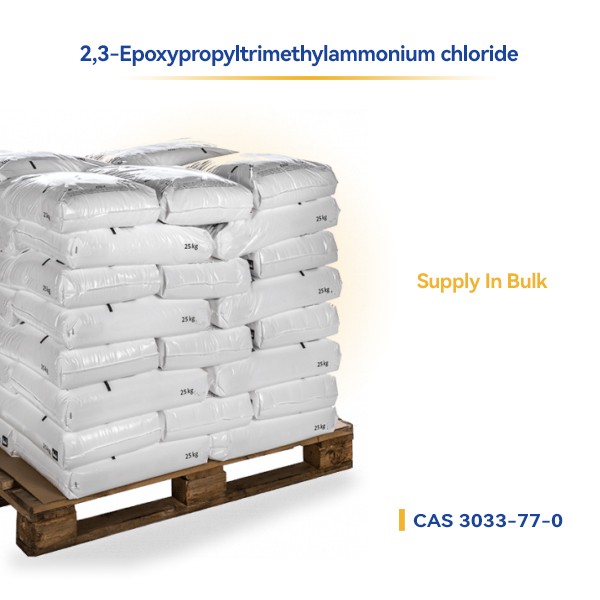
| Typical Packaging | 20 kg or 25 kg per bag; packaging options are subject to confirmation |
| Storage | Keep sealed and store in a cool, dry place in accordance with the current product SDS and technical documentation |
| Chemical Structure | 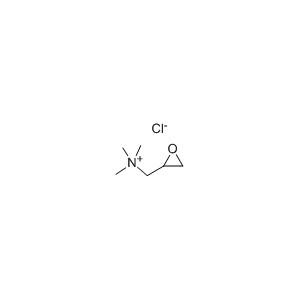 |
Reference Quality Analysis of EPTAC
The following analytical parameters provide a technical reference for evaluating solid EPTAC, focusing on active content, appearance, and residual epichlorohydrin.
Physical and Chemical Quality Parameters
| Test Item | Excellent-Grade Specification | Reference Result |
|---|---|---|
| Appearance | White or pale yellow powder or granules | Conforms |
| Active Content | > 93.0% | 94.84% |
| Residual Epichlorohydrin | ≤ 1,000 ppm | 200 ppm |
The reference results meet the excellent-grade limits stated in the applicable product specification. These values are provided for preliminary technical evaluation and should not be interpreted as guaranteed specifications for every shipment. Actual specifications and results may vary by grade and production batch. Please confirm the required grade and request the relevant batch-specific Certificate of Analysis (COA) before ordering.
Key Applications of EPTAC
EPTAC is a reactive epoxy-functional cationic etherifying agent. It can react with suitable hydroxyl-containing substrates under appropriate conditions to introduce quaternary ammonium groups. The resulting cationic materials are used in a range of industrial formulations, with performance depending on the substrate, reaction conditions, and degree of substitution.
Cationic Starch for Paper and Pulp: EPTAC is used to prepare cationic starch, which can function as a retention aid, drainage aid, or strength additive in papermaking formulations. The final performance depends on starch type, degree of substitution, and process conditions.
Cellulose Modification: EPTAC can be used to introduce cationic functionality into cellulose and cellulose-derived materials for applications requiring modified surface charge or improved interaction with anionic components.
Guar Gum and Other Polysaccharides: EPTAC can be used to prepare cationically modified guar gum and other suitable polysaccharides for selected industrial formulations.
Water Treatment Materials: Cationically modified polysaccharides and related polymers may be evaluated in selected coagulation and flocculation systems for water and wastewater treatment.
Textile and Specialty Chemical Applications: EPTAC-derived cationic materials may be used in selected textile processing and specialty chemical formulations where cationic functionality is required.
EPTAC Technical Application Guide: Cationic Starch Production
For customers evaluating EPTAC in cationic starch manufacturing, Aure Chemical provides a technical application guide covering a reference semi-dry process, operating conditions, dosage calculation, and an example formulation for a target degree of substitution (DS) of 0.03.
Read the EPTAC Technical Application Guide: Semi-Dry Process for Cationic Starch Production
Aure Chemical: Your EPTAC Supply Partner
Aure Chemical supports international B2B customers with sourcing and export services for specialty chemical raw materials, including EPTAC. We focus on confirming product requirements, coordinating available quality documentation, and arranging shipment details according to the order and destination.
Quality Specification Review: Key parameters such as active content, residual epichlorohydrin, and appearance can be reviewed against the customer's target requirements.
Quality Documentation: Available COA, TDS, and SDS documents can be provided for customer evaluation, subject to the selected grade and supply source.
Application-Oriented Communication: Customers can share their substrate, intended application, and target degree of substitution so that relevant product and documentation requirements can be discussed with the supply source.
Export and Logistics Coordination: Packaging, shipping arrangements, and export documentation can be discussed according to product characteristics, order quantity, destination, and applicable transport requirements.
Safety, Handling and Documentation
Follow the current product-specific Safety Data Sheet (SDS) and supplier instructions when handling EPTAC. Use appropriate personal protective equipment and good industrial hygiene practices.
Handling: Avoid direct contact with skin and eyes and minimize dust generation. Use suitable chemical-resistant gloves, safety goggles, and protective clothing. Provide adequate ventilation and wash hands after handling.
Storage: Keep the product sealed and store it in a cool, dry place. Follow the storage conditions stated in the current product SDS and technical documentation.
Transportation: Confirm the applicable transport classification and shipping requirements against the current SDS and carrier review before dispatch.
Documentation: Available SDS and COA documentation can be provided for customer review. Final handling, storage, and transportation requirements should follow the applicable product documentation and destination regulations.
Packaging
25 kg bag
Final packaging, capacity and net weight are confirmed in the quotation and order.
-
(2-hydroxytrimethylene)bis(trimethylammonium) dichloride CAS 55636-09-4 Prolonium Chloride / BISQUAT
-
3-Chloro-2-hydroxypropyltrimethyl ammonium chloride CAS 3327-22-8 CHPTAC
-
Methacrylamidopropyltrimethylammonium chloride CAS 51410-72-1 MAPTAC
-
Tetrabutylammonium Hydrogen Sulfate CAS 32503-27-8 TBAHS / TBAS
-
(3-acrylamidopropyl)trimethylammonium chloride CAS 45021-77-0 APTAC
-
-